IS ELOPING LEGAL IN WALES? REGISTER OFFICE AND CELEBRANT CEREMONIES EXPLAINED
It's one of the first questions couples ask me on a discovery call, usually with a nervous little laugh: "So… will we actually be married?" It's a brilliant question, so let's go through it step by step: how a North Wales elopement works legally, and where the magic of a celebrant-led ceremony fits in.
The short answer
Yes, you can absolutely elope in Wales and be legally married. There's just one thing to know: in England and Wales, a celebrant-led ceremony on its own isn't legally binding (yet). The legal part of your marriage has to be done by a registrar, a religious minister or an authorised person, at a venue that's allowed to hold marriages.
That's why most of my couples have two parts to their marriage:
A short legal ceremony at a register office with two witnesses, often called a "2+2" ceremony.
Your elopement ceremony, the one you'll remember forever. This is a personalised, celebrant-led ceremony on a mountainside, by a lake or wherever your love story takes you, written around the two of you.
Think of the first as the paperwork and the second as the heart of it all.
Why can't a celebrant legally marry you in Wales?
Marriage law in England and Wales is built around buildings rather than people. Civil ceremonies can only take place at a register office or an "approved premises", like a licensed hotel or venue. Since April 2022, a civil ceremony can also be held outdoors, but only within the grounds of an approved premises. A windswept mountaintop or a quiet lakeshore in Snowdonia isn't an approved premises, so the legal bit has to happen separately.
There is change on the horizon. In July 2026 the government opened a consultation called Tying the Knot, proposing a system based on the officiant rather than the building. That could let independent officiants conduct legally binding weddings in places like forests and beaches. The consultation closed on 24 September 2026, though, and any change still needs new legislation. For now, the rules below are the ones that apply. As soon as anything changes, I'll be the first to tell you!
Step 1: Giving notice of marriage
Before any legal marriage in Wales (except a Church in Wales wedding, which has its own process), you both need to "give notice". You sign a legal statement at your local register office to say you intend to marry. Here's what that involves:
Where: at the register office for the district where you live. You must have lived in that district for the past seven days. If you live in different districts, you give notice separately in your own districts, and you don't have to do it on the same day.
When: at least 29 days before your ceremony, and your ceremony must take place within 12 months of giving notice. For example, if you give notice on 1 May, the earliest you can marry is 30 May.
Cost: £46.50 per person, the standard statutory fee from 6 April 2026, or £63 per person if you're subject to immigration control.
What to bring: usually your passports and a recent proof of address. If either of you has been married before, you'll also need original proof that you're free to marry. Your register office will confirm exactly what they need.
Your venue: your notice has to name where your legal ceremony will take place. If you change it afterwards, you'll need to give (and pay for) notice again, so it's worth deciding this early.
If one of you is from outside the UK or Ireland, the rules are a little different. Unless you both have British or Irish citizenship or settled or pre-settled status under the EU Settlement Scheme, you'll need to give notice together, and you may need a visa to marry in the UK. Local authority guidance explains that the notice period can be extended to 70 days if a referral to the Home Office is needed. And if you're travelling to Wales to marry, the seven days of living here only start the day after you arrive. Please check on GOV.UK early on, as this is the part that takes the most planning.
Step 2: The legal "2+2" ceremony
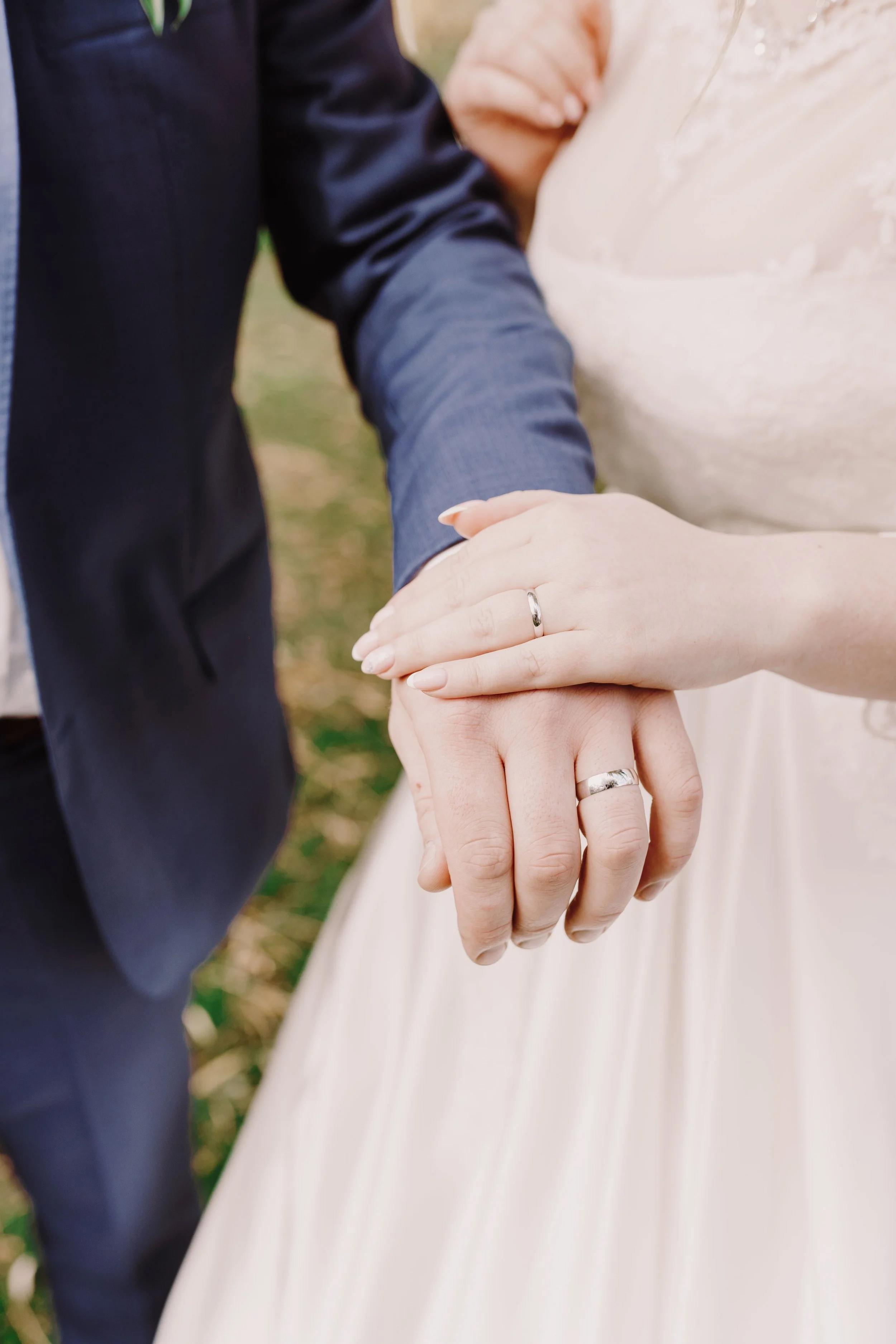
Once your notice period is up, you can have your legal ceremony. For many of my couples that's a statutory ceremony at a register office: just the two of you, two witnesses and the registrars. It's short, simple and affordable.
Here in Conwy, for example, the statutory Register Office ceremony at Llandudno Town Hall is £62 (April 2026 to March 2027), with two witnesses only, on Tuesdays and Fridays between 10am and 12 noon. A marriage certificate is £12.50. With two notice fees, that's a legal minimum of about £167.50 for the two of you. Fees and days do change, so always check with the register office you're booking.
You don't have to give notice and marry in the same district, either. You give notice where you live, and your legal ceremony can be at a register office elsewhere in England or Wales, as long as it's the one named on your notice.
Some couples do the legal bit a day or two before their elopement, some afterwards. There's no right or wrong.
Step 3: Your celebrant-led elopement ceremony

This is where I come in! With the legal paperwork taken care of, your elopement ceremony is completely yours. There are no set words you have to say and no venue restrictions. It's just your story, told beautifully.
As your celebrant, I'll craft your ceremony script around your love story, from the opening words to your commitments, ring exchange and vows. You can co-create it with me, or let me write it and keep it a surprise until the day. And because I'm your photographer too, every moment is captured without a second supplier hovering about. You can read more about how that works on the day in my Deluxe Elopement Guide.
Choosing the spot is one of the best bits. Dean and Tori said their vows amongst the rolling hills of Cwm Idwal, and Penny and James chose a glass-like lake in the mountains of Llanberis. You can see more in my portfolio.
How I help with the legal side
You won't be doing this alone. As part of the elopement process, I help you get in touch with the local register office and book your first meeting with a registrar for your 2+2 ceremony, so the timings line up with your elopement day. I walk through the full process in How to Simply Elope.
Ready to start? Take a look at my elopement packages, or send me an enquiry and tell me about your love story. I'd love to hear it.
And if you're already married and dreaming of saying it all again, Twilight Ceremonies offers sunset vow renewals and milestone ceremonies across North Wales every summer.
This post is general guidance, not legal advice. Rules and fees can change, so always confirm the details with your register office and on GOV.UK.